LECTIO #7 The Unfolding
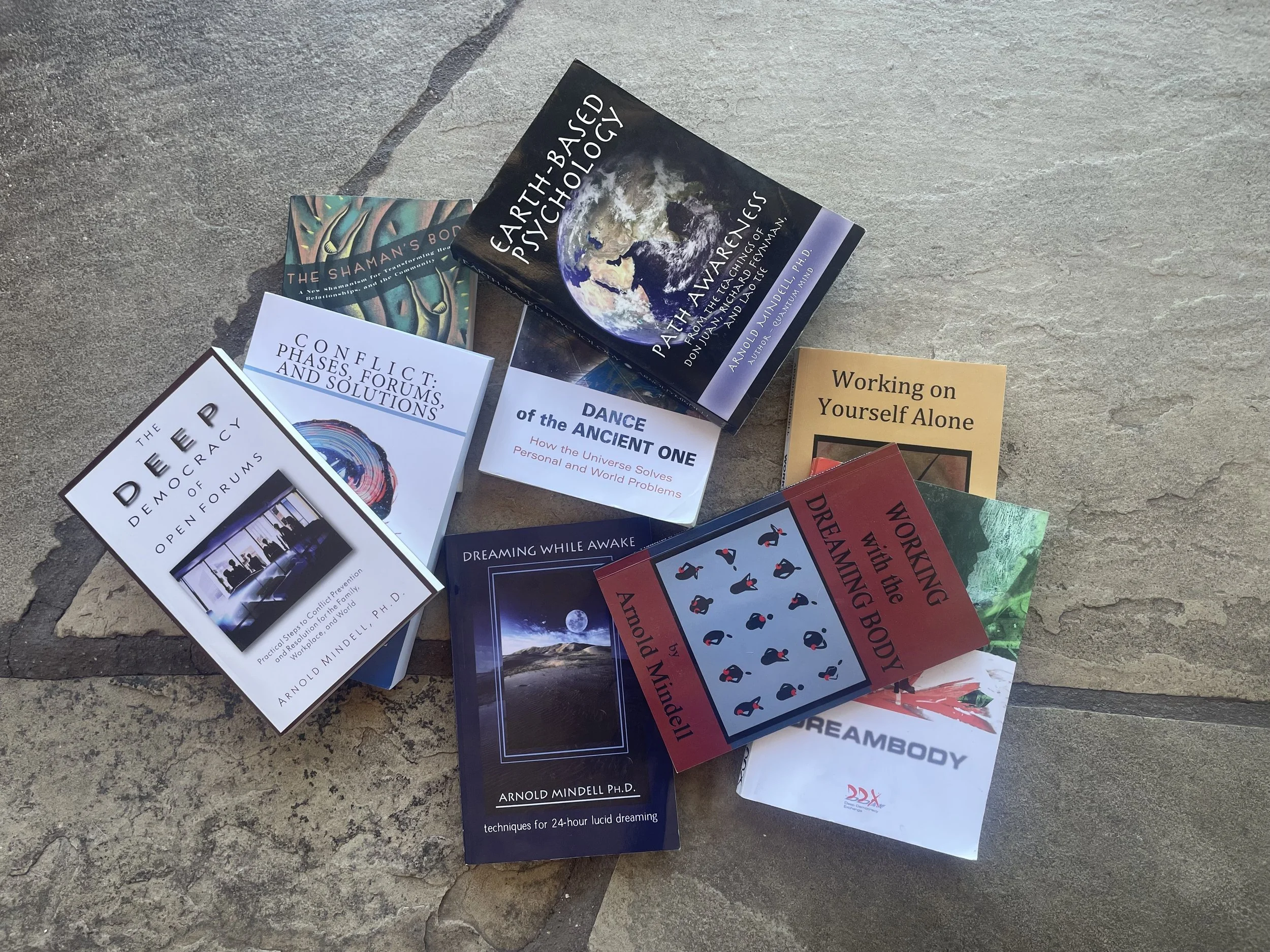
some of the books I own, not all read, and many missing, by Arnold Mindell
This was written for the Lectio and Seminar Subscription - and I’m sharing here without a paywall,
because it felt more like sending it out into the ether - which felt necessary this time.
Arnold Mindell died on June 10th.
I never met him. I never registered for any of his workshops. Never talked to him or wrote him. Don’t know much about him other than what he and his wife have written about themselves and their work.
He made me nervous.
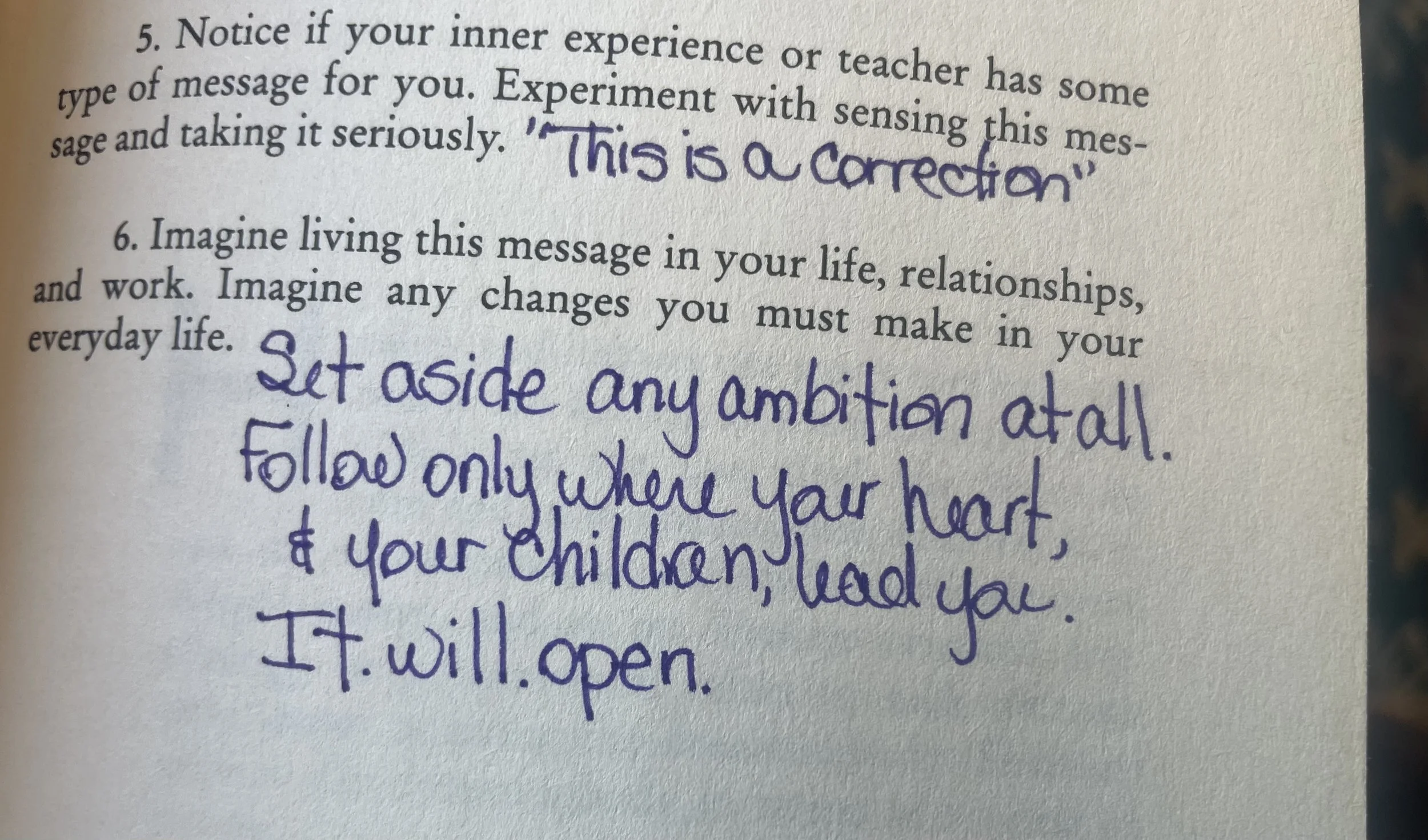
I often disagreed with him, and would leave little notes in the margins of his books as if to tell him so:
“Meh”
“Terrible example”
“Nah”
“Nope, nope nope”
He went further out on what he would call "the edge" than I ever could or would.
He worked with dreams and bodies and the symbols that our bodies use to try to communicate to us. He worked with symptoms and illness and death. He drew on Jung’s theories, Taoism, Buddhism and the teachings of various indigenous healers around the globe whom he had encountered personally. He worked with individuals, in small groups, large groups and whole nations and communities, what he called World Work.
I was, and am, far too inhibited, “body shy” in Mindell’s words, to ever engage in the stochastic, improvisational movement methods he called Process Work.
I was often uncomfortable with his occasional willingness to interpret bodily symptoms as indicative of psychological conflicts. More of my marginalia: "Listen Arny, sickness is sometimes sickness, and the reality and powerlessness of that, is the lesson in itself."
I was never smart enough to understand most of his diagrams, or his attempts to align dreaming process work with quantum physics - but I’ve never understood Jung and Wolfgang Pauli’s attempts to do the same thing.
I felt uncomfortable with his comfort using the term shamanism to describe his post- therapeutic practices – although I don’t doubt that the way he practiced would be recognizable to most indigenous healers around the world. I have an inherent suspicion of white psychologists who attempt to blur those cultural, racial and ethnic boundaries.
From what I learned about him through reading, he was a man who was far less inhibited about pushing boundaries, testing limits, going over edges, and exploring extremes than I ever have been, or ever will be. He seemed to willingly re-adjust when he was told, or discerned himself that he had overstepped or left his lane or disrupted the flow. He seemed to accept his errors as part of a process that allowed him to embrace his brazenness and fallibility as an adventure in learning, or perhaps more accurately – an unfolding adventure.
I was never sure if he was merely much smarter than me or madder than I am, or more entitled, more confident, more faithful or simply freer than I am. Probably all these things.
I am, what he might have referred to as a stubborn apprentice if I had studied with him. I needed to feel wholly free to challenge him, and understood that he was likely to tolerate, accept and even celebrate that stubbornness as necessary to my process - and if I had been his student – necessary to his process as well.
I engaged in all this sword-sharpening, this argument, agreement, general skepticism and learning without ever meeting or speaking to him.
This, to me, is what a book is for, actually.
There are many paragraphs that he wrote that changed my life, relieved and freed me, gave me permission, challenged me, pressed me onward even if I found myself wholly rejecting the next paragraph on the next page.
These are my favorite kinds of books.
The kind I can receive from without surrendering to.
I'd first read Mindell’s Sitting in the Fire, his book on working with large groups and whole communities in high conflict, before I received a cancer diagnosis. Even then – long before I felt any effects of an out-of-place leukemia growing in my central nervous system – I thought: "This is brilliant and necessary work, but this is way too intense for me."
I knew I could never metabolize all the aggression and pain in a gymnasium, or a theater filled with hundreds of people in communities torn to pieces by racism, violence, religious war, apartheid - and to facilitate some initial healing gesture through the wounds, guilt, rage and enmities of hundreds of people at a time.
It amazed me, but it was too, too big for me, far beyond my energetic capacities on my best day on earth.
Before I was halfway through the book went ahead and ordered four more, a sampler of subjects, off of his incredibly long list publications. This man did a lot of different kinds of things as a psychologist, healer, writer, facilitator, process worker. Many different kinds of big spiritual, therapeutic things but not at all resembling the billable individual psychotherapy with all the statements with all the proper codes to the insurer that I was up to my neck in.
His books were sitting there ready on my bookshelf, when the diagnosis came.
I knew, for myself, that cancer had come as a teacher and that listening to it as deeply as possible was the central task - whether I lived or died. That is a surprisingly lonely position to take, and there were few people who could tolerate talking this through with me.
I wondered if he’d get it. I took a book down - and dug in:
In many terminal cases, death itself must literally rule. Psychologizing about physiology, searching for the right medicine, using the best doctor or finding magical healers only seems to aggravate nature. The less one tries to do anything to hold back Death in such situations, the better the “sick ”people sometimes feel. Their dream messages say that fate itself must rule even though this means giving up personal history and even life itself at an early age. The only peace such persons find in the midst of their turmoil appears when they finally let go and follow the Tao, the eternal flow of things.
Mindell was right there. I appreciated that he spoke most often about healing as distinct from surviving and didn’t seem investing in outcomes other than helping people to negotiate an unfolding and meaningful relationship of some kind with their symptoms. I appreciated his help in listening to my body, which I was never great at, while remembering that doing so was essential regardless of how the cancer concluded.
“To get along with the thing that is bothering you”
It was my instinct to accept and befriend cancer no matter what it might do to me, and this frankly scared the shit out of most of my friends and family. Maybe this is why I needed to find the words of someone a little madder, smarter, more confident, more faithful, freer and older. He kept me company in that quest, and from what I could tell, As I worked with a cancer in my central nervous system:
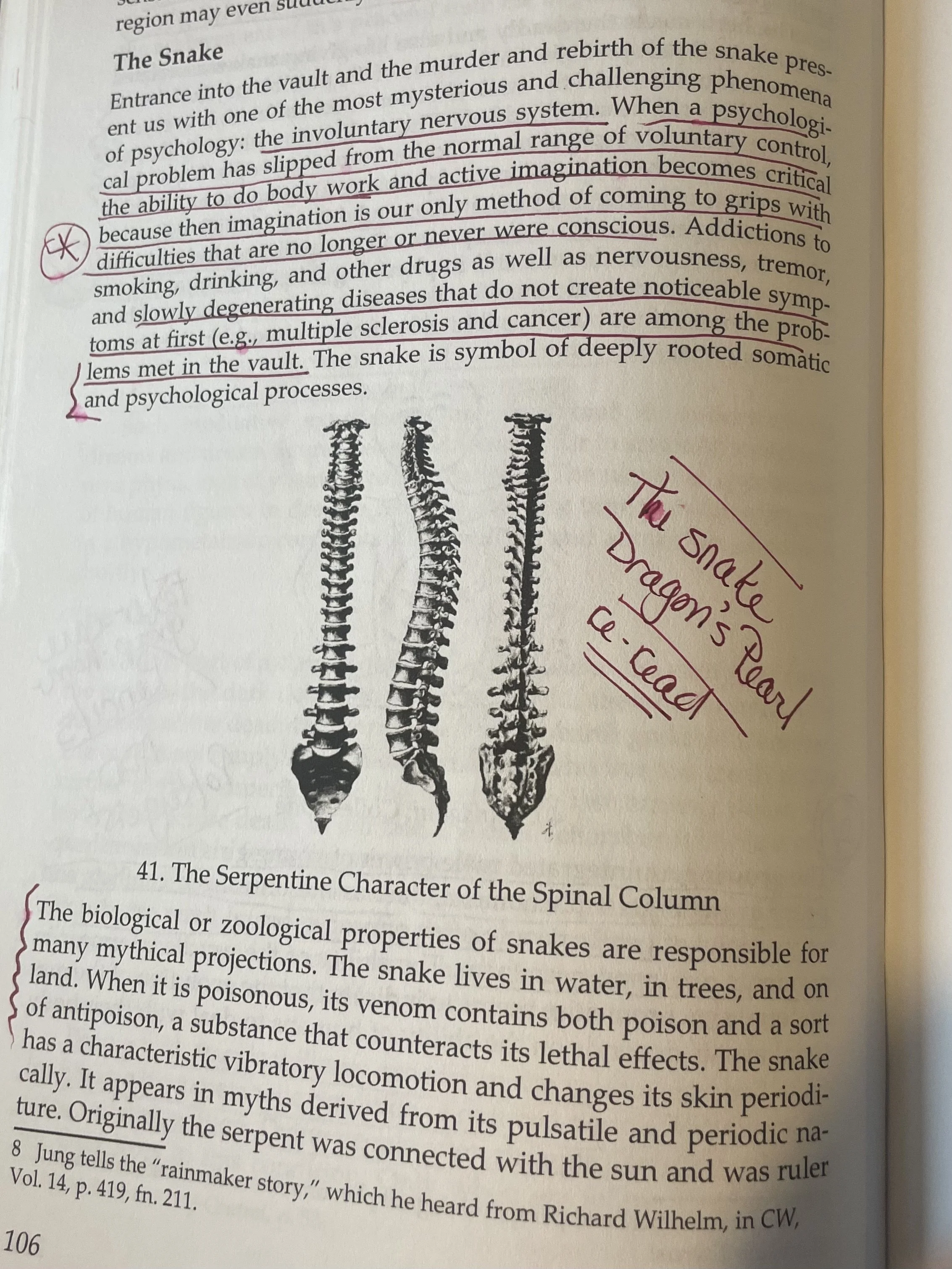
I did discern its message.
From my journal back then during treatment, on a high dose of oral chemotherapy and a biologic, and steroids and antihistimines:
“No more offering yourself up as a filter for other people's trauma. No more welcome mat for vicarious traumatization. No more overdrive. No more saviorism or pulling rabbits out of hats. No more above and beyond, No more attempting or succeeding at – by the hairs of my chinny-chin-chin– the nearly impossible.
Whether you are living or dying heed your valuable limitations. Embrace your frailly and humanity. They aren’t your enemies to vanquish. They are your inborn caretakers. Live in your one body first and foremost. Anything you share must come from the joy of sharing and unfolding connection.”
(Tangent alert: I find it frankly impossible to write anything about Mindell without the word: unfolding. He taught me unfoldingness.)
But that message of a No More Correction was terrifying in its own way.
What was I to do?
There was no way to live and work as a psychotherapist without regular, daily vicarious trauma. If I recovered from this illness or maintained well enough in its chronicity to return to work, it could not possibly be the work I had trained for, or in the role I had served for our twenty years.
But Mindell accompanied me here too. He made his own wild leaps, following uncanny calls that took him from MIT studying physics, to Jungian studies in Zurich.
And then, (if I recall correctly – I can’t find the passage in any of his books that I have kept for myself and not given away) when a strange woman arrived at his door and told him she'd had a vision of his following a completely different path - he recognized some truth in what she said - and took a great leap, following a wild call, and dove into the rapids of the river of life.
Each book of his I read seemed to take another daring leap into some new path of intuitive ideas - some of them too loose, too hot, others too anchored in mathematics that I don’t understand well enough to know if it made sense or not. But others were just right. So right, that you could see how the right or wrong of his ideas moment by moment was secondary, or at least equal to, the reality of the process, nonetheless.
Unfoldingness. But that sounds too peaceful. It could keep unfolding even as initiated by the strange, the impossible, the wild, the unknowable, the magical, the mad, the shocking.
In a flash. Such flashes large or small were calls to new adventures of unfoldingness.
See, I was in extreme circumstances, alone, with a unique cancer that demanded that I form a unique relationship with it. It had happened to me, and it was mine.
“What happens to you is part of you”
I needed some old dude who fucking knew how to live and work in the natural extremes. Extremes are real, and thank god there are brazen healers that are willing to live and work there. So, whatever had felt too intense or extreme about Mindell was the only thing that made me certain that however many WTF? ‘s I had written in however many of his books, he was suddenly just right.
And as the debilitating treatments seemed to be working, and I wondered if I could live on them “forever” as the doctors said instead of, “until it gets you” and getting back to some kind of gentle work slowly seemed a possibility and I had to put this long list of “no mores” into action - Mindell was there too:
You must remember that "a path is only a path." If the path you are on feels wrong, then you should feel free to drop it. Every path is relative, and knowing whether to stay on or to leave your path requires clarity and self-knowledge. Your heart will tell you when it is time to leave a path and when it is time to stay on it.
Sometimes you continue with old paths, even when your heart tells you not to. You may be staying on a path because it is the only one you know… Fears of new roles, financial insecurity, and even closed-mindedness to new experiences keeps you from significantly changing and living your dreaming body in the world. You feel obliged both to yourself and to others to maintain the personal history you have created. Personal history is a prison that you seem to have created for yourself.
Another drive that keeps you stubbornly on a path is ambition. You may be convinced that the path you have chosen will not succeed, yet you feel it must. Thus, you spend most of your time trying to achieve success on the path even when the effort is agonizing. In addition, you stay on these paths not only because of pride and hope for success, but because you believe that you alone must create success, even when your heart tells you that something feels wrong. You know that life is trying to redirect you, but you cannot listen.
You may also stay on your chosen path because you feel tired and finished. You have been through so much already that changing paths at this point seems impossible. Together with depression, exhaustion convinces you that nothing matters, that the world situation is hopeless and will never change…
His ideas gave me access to my own primal courage. Because the leaps that I was contemplating were tame in comparison to his, they seemed more manageable. Soon I heeded an urgent and impulsive call to leave New York after thirty-five years and move across the country to New Mexico.
I began pivoting my work toward peer support and workshops as soon as the chemo cleared out of my brain, but I didn’t really think about it. It rose up to be offered it and it unfolded.
I returned to my early group and community work - which the structures and economies of private psychotherapy practice had banished. Mindell's group processes accompanied me through the transition.
As I grew increasingly frustrated with the oppression, injustices, of my world and my profession and training and felt the need for my work and writing to abandon the "neutrality" of psychoanalysis and individual psychotherapy Mindell had already made my case for me:
“Many therapies were developed to work with the middle classes. They support the normative values of dominant cultures: family, work, education, knowledge, health, sanity, and everyday life. They stress insight and personal growth, life and happiness. Yet they seem to ignore prejudice, economic disparity, and violent racial conflicts.”
Mindell had already immersed his being in eco-psychologies as I had tried to myself in 2012 or so when I gathered a climate change and psychotherapy peer study group that proved too hard for me to hold together for too long.
"Our whole planet increases its suffering by trying to deal with people and the earth independently of one another, studying the earth without considering human relationships. In short, changing one part without reference to the whole makes solutions unsustainable"
Jung died on June 6ᵗʰ 1961. I’d never bothered to wonder about the season. I looked it up today.
And if I remember (again from which of his books, I can’t recall) the day Jung died was the same day that Arnold Mindell arrived in Zurich to study physics. Soon fate would introduce him to Marie Louise Von Franz, and a few months after that he randomly met Jung’s nephew, the president of the Zurich institute.
"Follow the unknown, the unpredictable"
"The world is weirder than you thought."
All the Mindell books in my current possession - plus some newer, minus some traveling the world passing through the hands of loved ones- have been in the back of my shelf since Christmas 2019 when we unpacked in New Mexico.
It has been on my to-do list - to sit down and do a concentrated immersion again, adding in some that are new to me, maybe reconsidering what I’d appreciated and rejected, for the past three years or so. I wanted to wait until the chemo was flushed away, and my brain and body had healed, and I wasn’t terrified, and I had some peace and quiet.
That took a while.
I decided I’d start this June.
I’ve learned that I’ve wholly dead-zone forgotten a lot of what I read on chemotherapy, which impaired my short-term memory. I’ve gotten used to picking up a book I think I’ve never read and finding my own notes on the pages, notes to a future self from a foggy past.
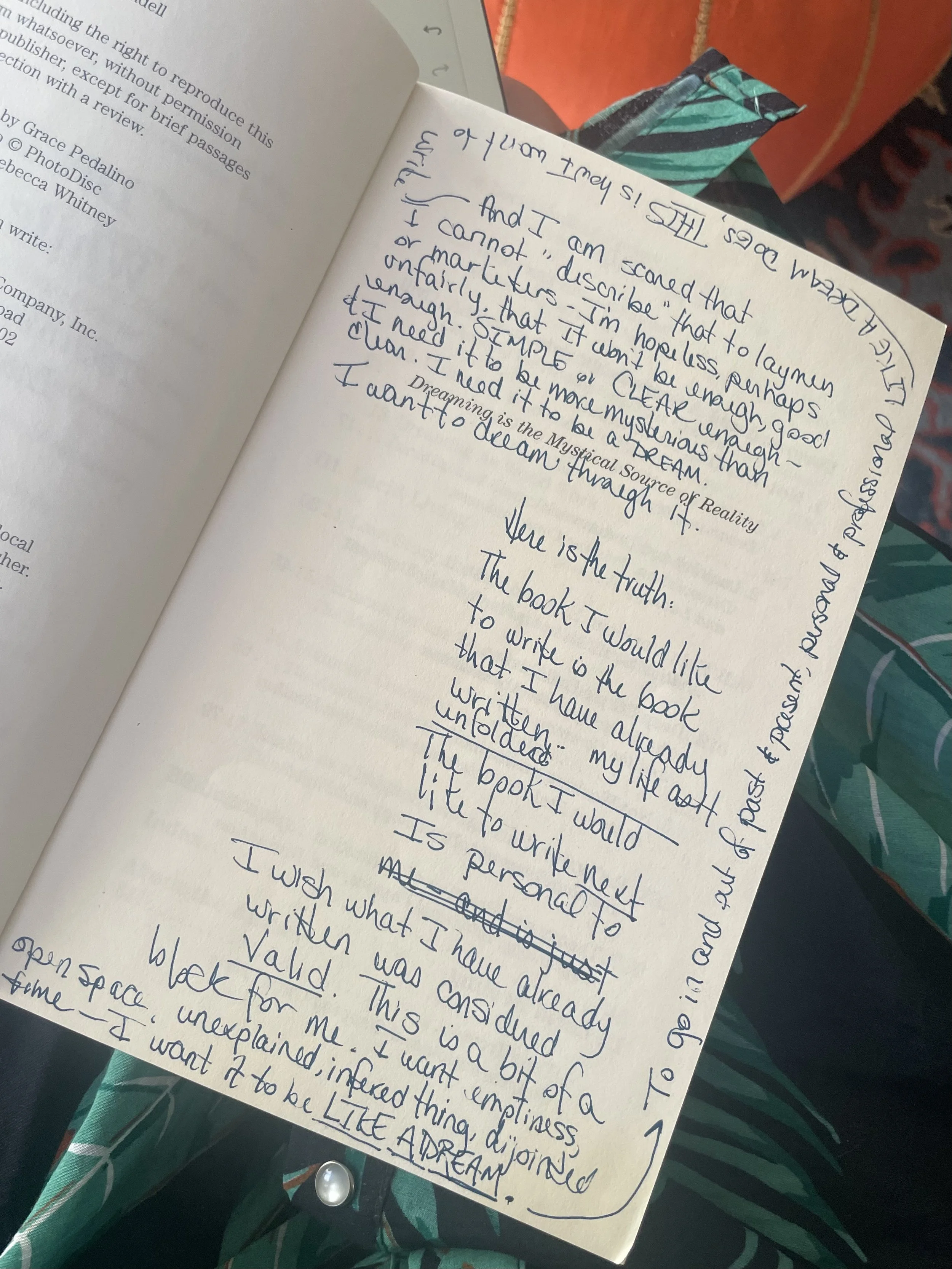
Notes I wrote on a blank page in a Mindell book, about the writing project I was immersed in at the time, the first draft of The Good Thief Dilemma which I am just now publishing on line.
But on June 9th this year, just a few weeks ago, I read a sentence that cut through me like a knife, like a truth-sword.
Again and again throughout life we are working on the childhood dream, our personal myth. At first the evil one just terrifies us, then it threatens our existence in the form of chronic symptoms and, later, as we join it, it becomes a mysterious ally, which gives us the impetus to live.
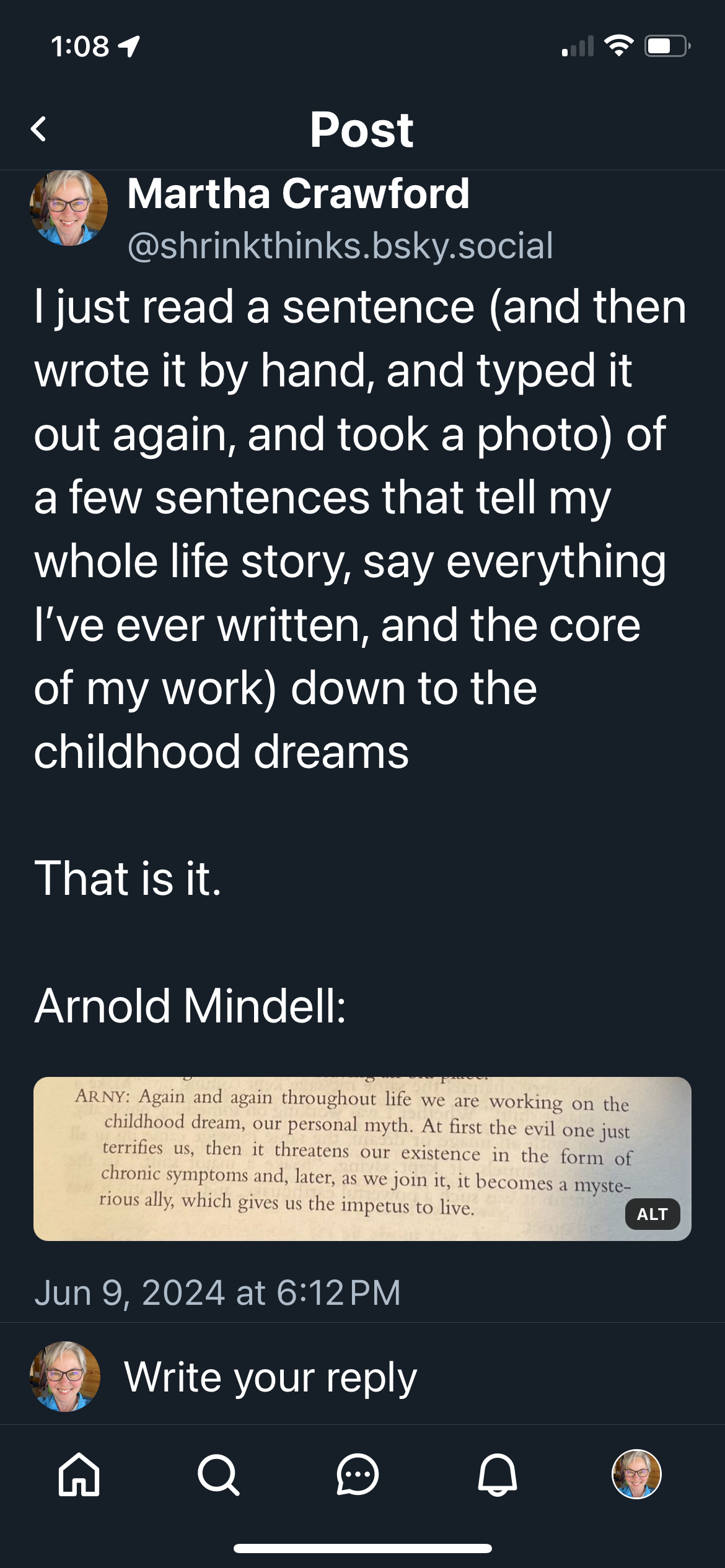
That night I fell asleep, and I dreamed about little people, going around sharp, narrow edges, into the unseen, unknowable unfolding.
“Dreams are processes trying to happen”
The next day my friend Catherine texted me to tell me he had died.
I just wanted to say, thanks Arny.
My favorite teachers are often those I have never met, and frankly as a very stubborn apprentice – I am grateful be in the outer-wave process of an unfolding that came to you and passed through you and through the pages of the books you published and in and out of me.
As an old poet said - “All goes onward and outward, and to die...,” – well, you know, luckier.
Best of luck in the Great Unfolding to you sir.