A Common Center
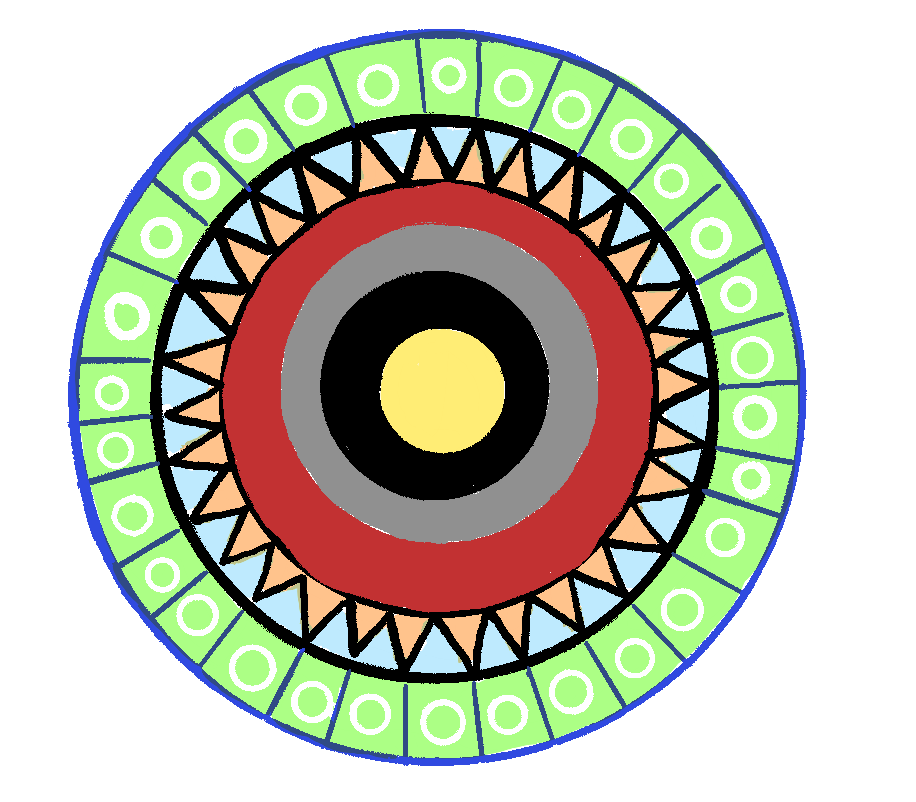
This quote from Martin Buber’s I and Thou expresses something I have come to believe is essential to healthy community groups:
And thus, the genuine guarantee of spatial consistency consists in this, that men’s relationship to their true You, being radii that lead from all I-points to the center, create a circle. Not the periphery, not the community comes first, but the radii, the common relationship to the center. That alone assures the genuine existence of a community
Buber is notoriously difficult to understand even in the original German and his book I and Thou is considered nearly untranslatable, so I can only tell you what I received from these words, the meaning I take from it, and the image that guides me whenever I form or facilitate a community group.
This is the image Buber is describing:
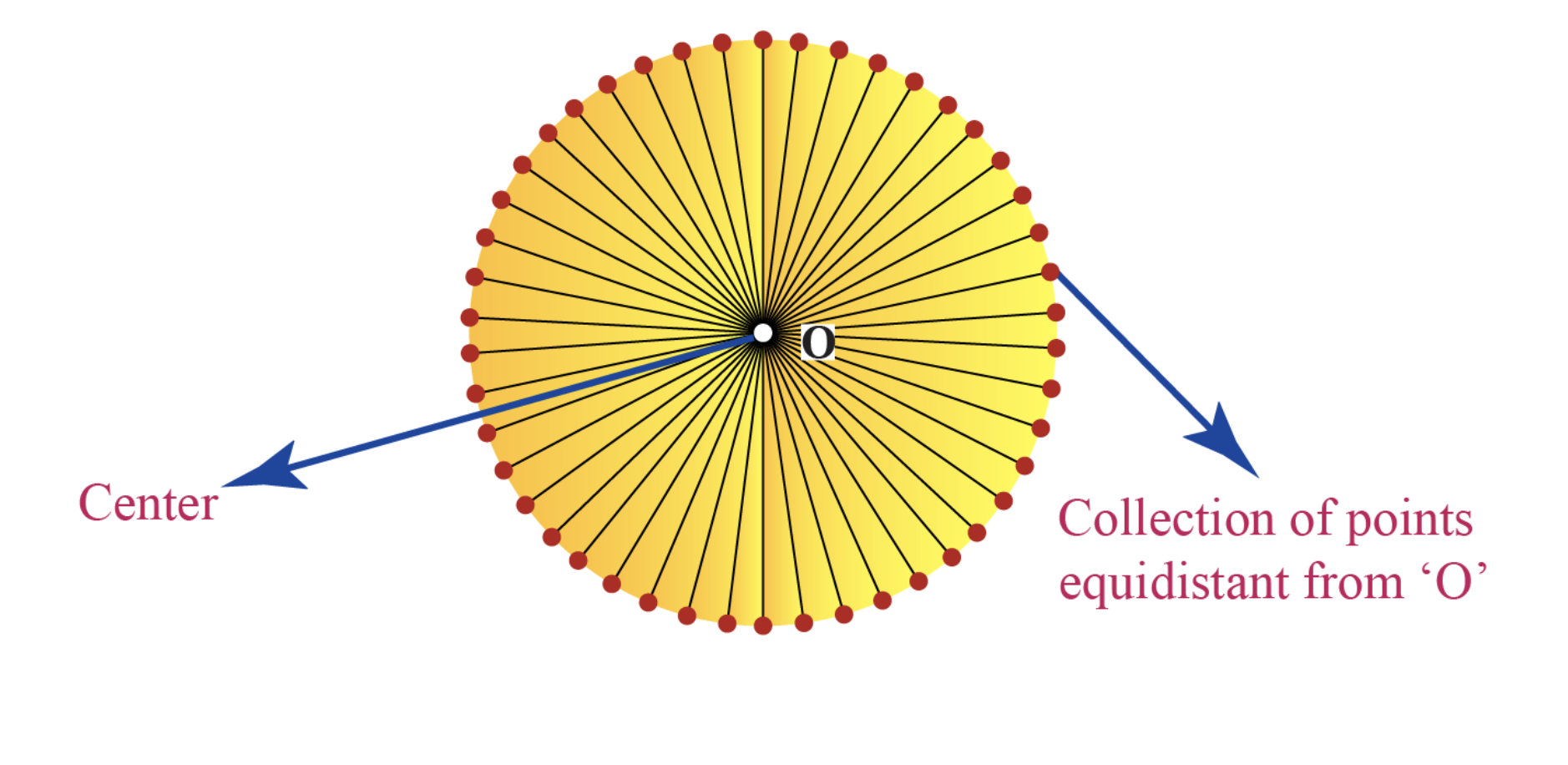
Healthy community groups are circles of peers who (metaphorically) stand around a common center – a cause, a value, a belief system, an identity, a mission, a challenge, a shared story, or experience. The center is their shared concern, the deeper purposes of their gathering together.
The community group members stand near each other as the points along the outer periphery. They are spaced equidistant from each other, and from the center – suggesting that they all have roughly equal emotional investment in and responsibility for the community.
The center isn’t the most important part of the group, for that would erase and swallow up the unique experiences that each person brings to the group.
Neither are the individuals stationed around the periphery the most important aspect of the group.
If they were, the wishes and demands they might have of each other could quickly become distracting, divisive, disruptive to their common purpose.
When the emphasis is primarily on the periphery of the group — groups focus primarily on: conformity and agreement (or disagreement) with each other, the preservation and purity of the group’s boundaries, strict adherence to often unstated implicit rules and norms, and group members trying to extract needs, understanding, and belonging directly from each other.
Many community circles and cliques that emphasize the outer ring over the center - have strict rules, spoken or unspoken, about who is allowed to participate, and how. In community groups that function this way, rules and norms are usually assumed and implicit and conflict is generally resolved by entirely by selective inclusion and exclusion. Someone who sticks out, disrupts, is a fly in the ointment, is seen as disruptive to the whole. Generally in community settings these folks are banished or politely phased or iced out to restore harmony.
Traditional group psychotherapy and group psychoanalysis often operate along the outer periphery emphasizing the participant’s interaction with each other but do so differently and for strictly therapeutic purposes.
Rules and norms are not hidden or coded but explicit. Conflicts among members that might be avoided, repressed, or banished in daily community life, emerge, or erupt and are actively welcomed in for clinical purposes. Members, with the support of a mental health professional especially trained in negotiating group conflict, are encouraged to face each other around the periphery, and learn to openly negotiate and confront all the places that fail and chafe in our attempts to connect directly to each other.
In my experience, this is how therapeutic groups operate and I believe it takes skilled and licensed professionals to surface all the unspoken tensions that live along the periphery of a circle, and help members withstand the hurts and discomforts and fears that emerge there.
But this is not the only way to gather in a circle.
All communities are circles.
A “genuine community” in Buber’s words, is the radii, the common relationship to the center, the lines of connection from the center out to the members on the periphery and back again. We stand along side each other. Each member is an end in themselves, some of our deepest community needs are met by working together, alongside each other, toward a common center, or a common goal.
When each participant is valued and respected because of their relationship to a shared concern, project, or value, that is where the “common relationship” lives.
This is how community groups become opportunities for belonging, by creating a space for self, for others and for a shared central purpose.
My experiences:
It took me many years of immersion in group work in many different ways , as a member, as a group psychotherapist and facilitator, as a community organizer, as a mentor and supervisor, as a Quaker, as a person living with cancer, as someone with high-risk conditions through a pandemic, as a bereaved family member, to begin to understand what, for me, made a group feel healthy and alive, and what made a group feel stifling, controlling, or alienating.
As I entered social work school, I learned that the classes in group work took the form of an experiential process group. The thought of group work was extremely anxiety provoking for me – as I always seemed to yearn to talk about things that others wanted to ignore or avoid.
Groups were places I generally hand to disguise myself to avoid shunning or shushing.
During that same period, I was also attended meetings for Worship and meeting for Business with the Friends (Quakers) at 15th Street Meeting in downtown Manhattan. This was especially lovely for me as my grandmother had been raised in a very Quaker home and her sense of spirituality and community were a profound influence on my own. I eventually spent a several years as the assistant clerk of the meeting.
From all I-points to the center
Quakers enter the meeting space and sit quietly and sit in a state of quiet reflection and receptiveness. If the meeting is gathered for a specific purpose, such as conducting the financial business of the meeting, or to determine the meeting’s next social action, the state concern is held in everyone’s mind and heart in silence.
There is no cross-talk.
Thoughts, reflections, ideas, challenges are expressed not to any specific individuals but to the center of the group for consideration by all.
The goal is one of inclusion toward forging consensus. Each voice that wants to speak is heard, and disagreements or concerns are not directed toward any specific person but toward proposition and ideas. Majority opinions may not dominate minorities.
Decisions are made by consensus when the clerk can discern and offer a path forward that includes and is acceptable to all perspectives. Consensus takes time. Sometimes a very long time. But laboring along side each other, and how we do this labor is as important, maybe even more important sometimes, than the final decision.
Individuals are also allowed to regulate themselves as they choose, by remaining silent, not attending specific business meetings, by “standing in the way” of a group decisions or by announcing that they are “standing aside” – essentially taking a pass - allowing the group to proceed without their full agreement
Members are encouraged to attend but not required. Rules and norms are explicit and ritualized. Meeting notes are crafted which reflect the state or the mind of the meeting.
Decisions are explored for weeks, months, years on end sometimes, before consensus is reached and decisions are finalized.
Here, dissent is seen as important - if uncomfortable - and must be deeply considered. The relationship of each individual is to what they experience as the “center” of the group,
Alongside each other, not from each other.
A well-gathered meeting takes place when the meeting is in deep alignment, all the individual “radii” focused alongside each other toward the center.
Quaker process has had a profound influence and impact on many community and peer group models. Twelve step meetings and Circle Groups draw directly from Quaker practices. The Talking Stick group model, which emerged from indigenous communities, relies on very similar methods.
I also facilitated many clinical and therapeutic groups professionally during this period – with greater and lesser success. I also participated in many different peer group supervision groups where we came together as psychotherapists to scrutinize our work together and to ostensibly support each other, which sometimes happened, and sometimes did not.
Several years later, when my children were little, I noticed my six-year-old son was working hard to make sense of his identity as a Korean American adoptee. One evening, as we sat together at the dinner table making our schedule for the summer – exploring possibilities for day camp and swimming lessons, he announced: “I want to take an adoption class!”
“What would an adoption class be like?” I asked him.
“It would be a room with grown up adoptees and teen adoptees and adopted kids and no one else!” he replied.
“Oh wow,” I thought to myself. How am I going to find a summer program like that for little kids?”
I woke the next morning with a rush of energy and a little dread: I realized that I could start such a group: I knew several adult adoptees who would want to join us, and how to reach more through various organizations I was affiliated with.
And I also knew it would be an extraordinary amount of work.
I sent out a call for interested adoptees and families on the various list-serves which constituted social media at the time. Twenty-five people: a mix of transracially adopted adults, and adoptive parents, with their kids in tow responded and we gathered all together at a kid-friendly restaurant in Brooklyn to try to figure out together what kind of support we all needed from each other.
That meeting eventually grew into a non-profit organization that would run three simultaneous groups for transracial adoptees divided by age and facilitated by teen and adult adoptee mentors. Adoptive parents met separately and simultaneously in the same space, for discussion, relevant presentations, and parenting support - in their own group facilitated by transracially adopted adults.
I wasn’t acting as a psychotherapist or a lead facilitator in this group. I was there as an adoptive mother, a peer, a convener, and a member of an organizing committee. All of our children found community, understanding and fun in the company of other adoptees, and the adoptive parents could struggle together with the support of invested adopted adults in supporting our kids’ racial and adoptee identity formation.
It helped all of us feel less alone.
One of the most powerful things I learned from that wonderful once little boy was that the places in our heart where we feel the loneliest can be the same places where others are feeling lonely too, and where we need each other the most.
In 2020, when the pandemic descended, I intensified my commitment to group work. I had been running study groups for psychotherapists – but it became clear to me that, while in lock-down and afterwards, we had to find new ways to intentionally reach toward each other – and I began organizing online community groups:
A discussion group to come to terms with our relationship to death and mortality, peer groups for overwhelmed psychotherapists, support groups for disabled people with immunocompromise and high risk for dangerous complications, groups on re-imagining our relationship to work and changing vocational paths, dream workshops and dream circles, reading and study groups, and even a workshop for people who wanted to learn how to convene their own community groups – The Group-Group.
I didn’t convene or facilitate any of these groups as a psychotherapist standing outside of the problem treating others. I convened these groups as a community member, as someone immersed in the dilemma, as a peer-facilitator. I was someone who needed to meet and talk with others about living with mortality, who felt isolated and frightened as a cancer patient with immunocompromise. I was re-imagining my relationship to work, dreaming dreams, wrestling with spiritual and political dilemmas.
And I wanted to do it with other people.
Temperature
On-going observation and compensation for the “temperature” of a group - hot, warm, cool, cold - is an essential practice, I believe, for all members of a community group, including the facilitator.
When I refer to a group as hot or hotter, I mean that something in the group design or central focus is likely to increase participant’s anxiety, vulnerability, or emotional arousal. This can quickly make group members feel defensive or self-protective and it intensifies the likelihood of conflict among the group members.
Toward the hot end of the group spectrum are traditional psychoanalytic group therapies where participants who do not know each other and are often selected for group membership because their experience and personality styles diverge. In psychoanalytic psychotherapy groups the therapist provides little structure or guidance about what to talk about and encourages frank discussion of underlying conflicts. Such groups can be powerfully healing and transformative for participants – but I believe as I stated earlier that similar very “hot” groups should be led by professional facilitators and psychotherapists with sufficient training in group therapies and high conflict communication in group settings.
But that doesn’t mean there can be no “heat” at all in community groups.
There are many methods and design elements that can keep even very hot subjects cool and grounded. Climate café and Death café gatherings are examples of community groups that focus on very hot, anxiety provoking subjects, but the design of café groups serve to cool down the group’s tone.
The group gathers in a public place - a coffee shop for example - which encourages group members to regulate their behavior differently than they would in a private office. Participants keep their voices and words modulated, conscious that others in the environment might hear them. The conversation and engagement may be paced with built in breaks created naturally by food and drink service and bathrooms nearby. Members are more able to sneak in late or out early, as egress isn’t necessarily as disruptive in public place. The discussion is usually topic focused, open discussion and sharing emotions is more contained, and guided by a lay facilitator who is familiar with café models.
Many kinds of structures – café groups are just one example among many– serve to ground, anchor, and cool down the group.
Cooler groups are those that encourage people to regulate themselves and focus on keeping members more comfortable. Anxiety is minimized; people don’t get as defensive as they are encouraged to stay closer to their comfort zone which helps them communicate more clearly, slowly, thoughtfully, and less reactively.
Researcher and couples therapy expert John Gottman teaches about how healthy relationships manage conflict constructively by calming down, self-soothing and striking when the iron is cold instead of hot. Their couples therapy methods encourage people to stay silent and wait when they are agitated until their bodies, heart rate and neurochemistry have cooled down enough to think clearly and engage in fair discussion again. Couples are even encouraged to wear heart rate monitors and to pause conversation if their heart rate rises above a specific number.
The design and structure of community groups “around a common center” – helps keep members level of emotional arousal lower and cool enough so that participants are less likely to make excessive demands of each other and are able to encourage and support each other freely with less of conflict and defensiveness.
Pulling the group’s attention back to its central purpose and away from interpersonal conflicts, calling for a moment of silence, encouraging self-soothing, hydration, snacks or bathroom breaks, engaging in a contemplative exercise, or opportunities for movement, or discharging anxiety through humor as well as structured turn-taking are all examples of methods that help community groups “cool down” when the interactions or subject matter get too “hot” for the group to function around its central needs or values.
Healthy groups, healing communities
Healthy community groups tend to seed, support, and collaborate with other community groups. The branch of psychology that contends with healing whole communities and cultures impacted by trauma, disempowerment and fragmentation is called Liberation Psychology. Its founder, El Salvadorian social psychologist, philosopher, and Jesuit priest, Ignacio Martı́n-Baró, believed that one of the primary methods of healing andempowering communities started with the formation of small community groups.
The hope and the outcome is that small changes generate larger ones.
Peer support groups, discussion groups, reading groups, study groups, social action groups, hobby, and recreation groups and those that focus on shared lived experience or identities don’t require mental health professionals as facilitators. They are our right and responsibility to each other as human beings living in community. We can come together to remove litter from a strip of untended roadway, or because we share a diagnosis, or because we need to grieve or celebrate together or simply because we want to be in the company of those who also care deeply about the things that matter most to us.
If you would like to read more from me on community group processes: