Our Temptations
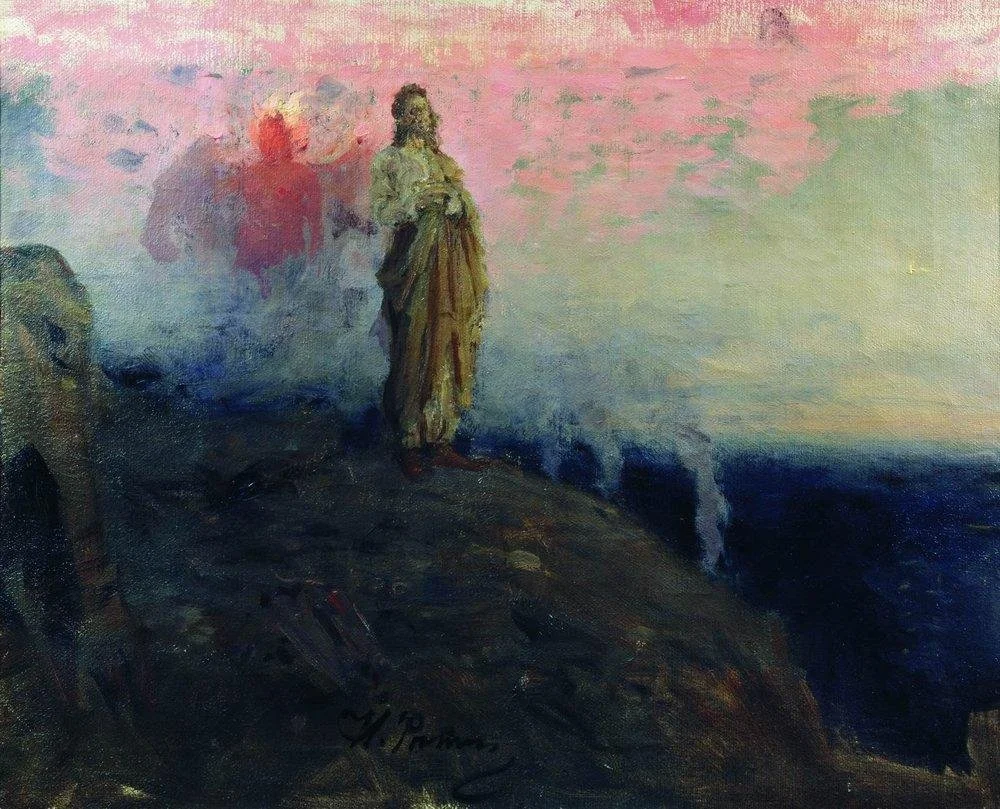
I do not speak of creatures from the pit with eyes of fire. Not at all. I mean rather to indicate the facile and deceptive structure of illusion that embed themselves inside the souls of humans with such vengeance as to take possession of their very lives.
The virulent demons that are inhabiting you are not grotesque little monsters with thrashing tales. They are illusions, stories you are telling yourself that are utterly fallacious; bizarre and fantastic lies which you nevertheless believe, and which consequently are taking your life from you.
~ Martin Bell, The Way of the Wolf
If you decide to enter this dilemma with me, I want you to know there is a way out – but that you probably won’t like it.
There are a few things I think it is important for people to deeply consider as we wait on the cusp of an extraordinarily cruel and dangerous era.
I certainly do not have the mysteries of evil and abuse solved – but I’ve learned a few things from negotiating its pathways through out my life.
We call it by many different names: evil, sin, sadism, sociopathy, psychopathy, dehumanization, colonialism, immorality, cruelty, abuse, dominance, supremacy.
Ruthlessness.
Sociopathy and psychopathy are not currently diagnostic terms – people with high levels of sociopathic or psychopathic traits who are given a DSM diagnosis are generally categorized under “Anti-social Personality Disorder”
They are terms that clinicians have used, and some still do in formulating the personality organization that leads to sadistic, manipulative, and unemphatic behavior.
Sociopathy describes immoral or amoral traits, impulses and behaviors (lying, manipulation, criminal acts, etc.) that are a response to environmental factors, abuses, oppressions and deprivations through the course of life. Psychopathy is the word used to describe immoral traits, interpersonal coldness, and sadistic tendencies, impulses and behaviors that are associated with congenital neurological incapacities and “incurable” disabilities in moral reasoning.
All of these words, religious, diagnostic have a long history of being weaponized by the dominant culture against minoritized communities and against cultures that uphold different moral norms and taboos.
But I am not willing to abandon these words as of yet, to discuss these human capacities and incapacities. Because these ruthless states – in ourselves, and in others, in governments, and in our unsustainable instiutions need to be able to be recognized, identified in order to restrain and harness them.
When you step into a discussion about ruthlessness, call it what you will, you step into a hall of mirrors – where some panels reflect images of yourself back at you that you do not want to see, and some glass panes offer you a clear, framed view of others.
And you cannot negotiate this space at all unless you can recognize yourself and are willing to see yourself clearly. We are now in a time where everyone will need to consider what it means to be in the grips of the demonic. And to be able to confront it around us, we must first know, intimately and specifically, where it resides within us.
Luke 4-13: Vision Quest:
Once more Accuser took Jesus up to a high mountain and, in a moment of time, showed him all the great nations of the world. “All of their power and beauty can be yours!” the snake said smoothly. “They were given over to me, and I can give them to anyone I choose. If you will bow down to me and my ways, they will be all yours!” ~ First Nations Version
The lust for power, the hunger for dominance has been a throughline through the entire history of this nation – since its foundation by genocidal enslavers. Every national institution and system have been organized around men who felt entitled to insulate themselves from death, disability, discomfort, and even minor inconvenience with the bodies of any living thing that they could dominate.
This is not new. This is only particularly explicit in the moment. These demonic energies live in the heart of all colonial projects, as well as through personal and familial histories.
A ruler who controls the labor and lives of others through a seductive and eventually forced dependency upon him.
And the capacity to be tempted, entranced, seduced, addicted, possessed – to be lured by the coldest face of the Trickster lives in each of us. The rush of power, the high, the sense of inflated entitlement, the belief that we are special and therefore extra deserving: The comfort! The peeled grapes! The luxury! The glorious, relaxed pleasures. The freedom from fear. The insulation from the sharp edges and the hard knocks of living. The ease. The relief. The power to shape the environment and direct the behavior of others to suit our preferences.
It takes a moment to even think beyond the deliciousness of it all. To remember that this power to create comfort and security comes at the expense of lives that have been forced to insulate us from all discomfort.
All security is an illusion. It is a demon that bids you follow this bright path. And at the end, what can there be except the full anxiety of that which is?
~ Martin Bell
This terrifying era will demand that we confront the parts of ourselves that have always known that the pursuit of excessive comfort, resources, security required the death and domination of others.
This is each of us.
I am not suggesting that the oppressors and the oppressed share equal responsibility, or power. And I’m not saying that everyone succumbs to these temptations.
I am simply saying that we are all tempted and tempt-able. Jesus was. Buddha too. He had to touch the earth with his hand to ground himself while he faced his own demonic temptation of unlimited power and comfort.
We all want some kind of power in our lives. But we often forget that power has a warm, beneficent, and generative face, and it has a cold indifferent and deadly one.
They are inseparable from each other.
And perhaps we all succumb to the pleasures and inflation of power now and then, here and there, when we momentarily have a chance to seize them. Especially if we have chosen not to pay close attention to ourselves, or question our motives and desires, refusing to consider all that we really are.
I’m not exempt. I don’t think you are either.
Everyone has psychopathic traits; each of us is missing something or has some aspect that is markedly underdeveloped… I am not speaking of us and of them - of us as balanced integrated and whole and of others who are missing something, the psychopaths ~ The Emptied Soul, Adolf Guggenbühl-Craig
“Speak of the devil!” we exclaim when we were just speaking of someone, and they arrive. But the full phrase is “speak of the Devil and he will appear” and here is how that works:
When you speak of someone or something that has activated your rage, your righteousness and your sense of moral superiority enough to foreclose on them as demonic – you now feel entitled to move against them with any and all weapons you have at your disposal.
If, as Guggenbühl-Craig suggests, Sociopathy, Evil is an archetype that lives in all of us, as a kind of instinctive ruthlessness. This is the same natural ruthlessness that helps all of us animals hunt prey protect off-spring, hold our territorial boundaries and maintain nature’s order.
But:
If an organism or aggregate of organisms sets to work with a focus on its own survival and thinks that is the way to select its adaptive moves, its "progress" ends up with a destroyed environment.
Dominance, over-developed can do damage of an absolute order, upsetting natural balances otherwise so carefully protected… Whenever charisma and leadership burst the ordinary bounds of behavior in an individual, there is generally an unusual change in the manner in which the group or society behaves
~ Vine Deloria. The Metaphysics of Modern Existence
It is also important to understand that when we encounter ruthless dominance in another it summons our own. When we imagine we are fighting monsters, that is when we are most in danger of becoming one.
Even harnessing our ruthlessness to our love, for love’s sake, isn’t a fail-safe. Ruthlessness easily attaches itself, twisting itself around our deepest loves, needs, and vulnerabilities.
Anna Ornstein is a psychiatrist and a self-psychological psychoanalyst who has spent her life studying genocide - and for good reason. A cousin by marriage to my in-laws, she was in Auschwitz as an adolescent - with her mother, my mother-in-law who was near to her in age, and my grandmother- in-law. When the war ended, she moved to Germany and reunited with the love of her life, Paul Ornstein. They attended medical school there and received their initial psychiatric training. Their patients were Nazis. Their classmates were Nazis. Their teachers were Nazis.
And Anna makes this point: None of those she encountered were sociopaths, or psychopaths. They were people who were desperate for an admiring authority figure, who would tell them that he would love and fight for them, protect them and allow them to bask in his light as an extension of him. The temptation that they succumbed to came in the form of the promises of a powerful and devoted parent.
That was it. That was the simple hole that Hitler offered to fill to tempt people into horrific acts of cruelty and complicity.
And when I looked through the three thousand dreams of Donald Trump that I had collected I saw the same thing: not a house of horrors, not hordes of demons. Just people who saw Trump as shoring up their unbalanced identities, as speaking to their emptiness:
Dreamed I met Donald Trump in a shopping center. His first words to me were, “You are an exceptional historian.”[iv]
Last night I had a dream. Trump has visited us on Christmas. When he saw our Christmas tree, he spoke: “Biggest Christmas tree ever! So great! So fabulous! Well done. So Great!” “Thank you Mr. President!”[v]
~ The 45 Dreams Project
I had imagined that when I sat down to sort through the dreams and psyches of Trump’s admirers that I would find some deep personal stake in the oppressive policies he has advocated – instead, I found something far simpler and more primal: the simple, childlike need to admire and be admired by an all-powerful authority figure. Nothing more coherent or complex than the need to plug a hole left empty, a daddy-hunger seeking satiation.
Marie Louise von Franz states it this way:
It is as if they had the right to lie, cheat and murder with no self-doubt, and no self-criticism. Underneath somewhere is also an ego-centric baby full of idealistic delusions, which, by its touching innocence hauls others into wanting to help and rescue the poor person; but that inner infant is a parasite – it never develops and therefore sentimental pity is inappropriate.
I know this infantile hunger in my own life. I know how it was exploited. I know how it bound me. I know what I became capable of, the murderous forces that were summoned in me when I had the wherewithal to fight.
These are forces we have to know intimately within ourselves when we encounter others who are possessed by them, or we will not remember to touch the ground and may be wholly overtaken - from the outside and from within.
Ruthlessness is an archetype, an instinct, a universal psychological state that is present to some degree in everyone. We must first know it within us, in order to confront the other.
Consider yourself and your evil enemy on a shared continuum of ruthlessnes. The degree of ruthlessness between us, and in our own stories over time are wildly variable, more fluid for some than for others. Ruthlessness emerges when our capacity for love, for compassion, has failed temporarily, failed to develop sufficiently, or failed to develop at all.
Our tenuously-wired capacity for compassion can be shorted out by a power surge of our most primal instincts: fatigue, lust, hunger, rage, conformity, fear
The phenomenon of evil is simply the appearance of something demonic or abnormal, a kind of overpowering nature phenomenon, which does not pose any ethical problem but the purely practical one of how to either overcome or successfully escape it. It becomes a question as to whether one can overpower the phenomenon or whether one simply has to save one’s own life. ~ Marie Louise von Franz
But how do we overpower it? How do we dominate dominance without exacerbating and perpetuating a never-ending cycle?
Womanist theologian Delores Williams talks about the problem of social evil this way: As “alienation from God, Spirit, Neighbor and Self.” For Williams, acts of resistance to social, cultural evil is “ the highest form of obedience to what is holy.”
This is how I hear this: We must resist this alienation. There will be times when we may have to fight ruthlessness ruthlessly. There are times when we will need to summon our own monstrosity to battle monsters. But it is extremely important not to be merely possessed by these primal forces when they rise up in us – we must keep them tethered to our sense of what is sacred, our souls, the well being of all living species as our relatives on this earth.
What is needed is not to strike straight at evil but to withdraw to the sources of divine power, and from there to circle around Evil, bend it, and transform it into its opposite ~ Martin Buber, Tales of The Hasidim
We must stand in what is best for the souls and spirits of all impacted. We stop destructive behavior because it is destructive to us, and to those who are enacting it. We harness our own evil because our own cruelties will ultimately destroy us as surely as anyone and everyone we inflict them on.
We have capacities, proclivities, disabilities, conditioning, dispositions and traumas that have shaped our destructive energies. As long as we imagine the harms we visit on others do not harm ourselves, as long as we imagine that the destructive archetype, the Accuser is only outside of us and not living within us - we are lost, and we will lose.
Forces as elemental as the love and safety that we most yearn for may be twisted by The Trickster and lead us into temptation. This is America. This is who we are. This is in our homes, schools, institutions and in our long history of patriarchy and colonialism.
Even the most sadistic and destructive man is human, as human as the saint.
Vice is human.
Destructiveness and cruelty are indeed destructive of life, of body and spirit, destructive not only of the victim but of the destroyer himself.
They constitute a paradox: they express life turning against itself in the striving to make sense of it.
This is the only perversion.
~ Eric Fromm
And this is you. And this is me.
And we must know this to learn how to restrain it, to defy alienation, to obey what is holy, and protect what is sacred.