Aspirational Entities
As a twelve-year-old boy, C. G. Jung had the sensation that within him lived a second self, a man of the eighteenth century an important old gentleman with buckled shoes and a powered wig, and a fancy carriage. This inner, important man was a generational peer to Jung’s eponymous grandfather, Karl Gustave Jung, a doctor and university president, and a suspected illegitimate and unclaimed son of the great genius Goethe.
“Who in the world are you anyway?” young Carl asks this old fancy man in his mind.
Over time Jung dismissed this entity, but this elder guide seemed to merely reformulate, and resurface in different guises throughout Jung’s life and internal explorations.
“a picture of myself, living in two different ages simultaneously, and being two different persons” ~ Memories, Dreams, Reflections
Ego-psychology folks might call such an image an ego-ideal, an aspirational self, the adult that Jung hoped to be one day – the rightful descendant and inheritor of his impressive grandfather’s status, and his great, rumored great-grandfather Goethe.
Our potential selves, our aspirational fantasies are tricky buggers. They can often convince us, and others, that the self we hope to be, want to be, that we wish we were, is our truest self. People fall in love with the potential selves and capacities they sense or project onto their friends, their partners, and their children. Rejection and rebellion erupt when ideal visions diverge, but it can be intoxicating and dangerous for all involved when anyone is loved only and exactly for who they wish they were.
We aren’t who we hope we will be. We are what we are, warts and all. And this is true of our friends, our children, and our partners. We may see who they could be, who they might be, who we all might be if we were perfected and inhuman – but we all need to come to terms with who we happen to be.
And this projected ego-ideal - constructed from our cultural inheritances, placed onto us by the hungers of others, or cast into the future by our own ambitions - can be entrapping, cruel, impossible, perfectionistic. It can devalue all that we might manifest and ignore and stomp on our limitations. It can torture us as imperfect children, as less-than-saintly parents, and as unglamorous lovers. It can shame our limitations and vulnerabilities, and press us into over-extension, over-exertion in our professions, vocations, and careers. It can trick us into thinking we have accomplished nothing, that we have failed to become what we wished we were.
But who in the world are we?
Who are the imaginal entities that served and guided me, tortured, and shamed me, that emerged and faded and transformed over the course of my life?
My earliest notions, as a younger child, seven or so, of an aspirational self were clearly drawn from the stories I had immersed myself in. Dorothy Gale on her journey to Oz, Meg Murry tesseract-ing through time and space, Jo from Little Women, Katie John, Caddie Woodlawn, Scout Finch. The bigger pre-teen and teenaged girls with ruddy cheeks and sticks in their hair, wearing clothes you could run, climb, sweat, and swim in, wearing shoes that were practical with reinforced toes, or no shoes at all on their healthy calloused feet. The girls who could not be tamed.
Those girls. The ones that were fearless, smart, brave, and unfussy. They asked impertinent questions and talked to adults as if they were one themselves with no patience for being talked down to. They avoided frills and dresses whenever possible unless they had big pockets that could carry stones and frogs and could be tied up out of the way. They had fathers who admired them and encouraged them to run wild and free and to read forbidden books, and mothers who fretted over their feral behavior.
Some conglomerate image of myself formed from bits and pieces of all of them, from my older foster sister who wore Earth shoes and corduroys and plaid shirts, from tales about my mother and her incorrigible behavior as a girl and the multiple black eyes she would get from fighting boys at school. From learning that my grandmother Wilma had been called “Billie” until she went to college and met my grandfather.
And even as I outgrew this Scrappy Girl, she stayed with me in the deep background and would throw a fit whenever I forced her to wear clothes that were too feminine or silly. She would emerge to forcefully reject high-heels whenever they seemed required, and made it challenging to dress as I felt compelled to as I moved into later adolescence and young adulthood, as my adult body took hold – bigger hips than Katie John-Jo-Meg-Caddie-Scout would have expected, and boobies that required more substantial bras than this aspirational self would have wanted to be strapped into, as restrictive as the expectations that were strapped onto young ladies of my time, place and station. It was time to pull myself together in ways that the outside world required.
I had nothing new, no new aspirational image to guide me through this era, no internal hero or heroine to shape myself into.
This Tom-Boy Girl-child had tantrums about my protectively feminized wardrobe for many years, and didn’t let go for a long time, and truth be told, I am still happiest, even at sixty years of age, when I see myself as an adult version of her – in shoes with good tread and clothes that let me climb and scramble easily across rocky terrain. I was eventually able to create a life that didn’t require me to abandon her taste or go forward without her approval – but it took time and caused me a fair amount of distress until I was old enough that no one could any longer press me into taking on the role of ingénue.
I also had no earthly image of the mother I thought I should be, other than the ones that I wished my mother and step-mother could have been but were not at all. This Inner Ideal Mother, the one I’d yearned for and wished for in childhood became a perfectionistic unmodulated, inhuman archetype, impossible to live up to. I fought it off constantly, rebelled against it, surrendered to it, and lost to it more than once. I could only set an intentional goal to live with more discernment and compassion than my own parents, to consciously aspire to Winnicott’s merely “Good-Enough” mother, although I had not seen one or known one with my own eyes.
Perhaps many of my positive and negative fantasies were transferred and projected back and forth among the battalion of Brooklyn mommies that surrounded at the playgrounds, the kiddie pools, the baby-and-me music classes, school pick-ups and karate drop-offs. Some confirmed my choices, some I allied with, some I went to battle against, some I rolled my eyes at, some I had contempt for, some I envied, others I pitied. Just as they all variously approved, devalued, envied, or pitied me as Mother.
But it was also during these mom-years, the frantic years, the sandwiched years, the therapist years, and the years of relentless care taking that a new ego-ideal started to form, to extricate me from being wholly possessed by the good/bad- breast- care taking archetypes that possessed every moment of my actions and daily schedule. A new secret second-self emerged:
I could see myself as an older woman, in her late sixties or seventies. She was short, chunky, wearing fashion-less black pants, and a black short sleeved shirt with a minister’s collar. Her grey hair was very short and plain, over a square, jowly face. No distinguishable waist, hips, or breasts – just one squat rectangle. She sat in a basement office, under some progressive church, where she would read, and write, assist, and teach. Her swollen ankles in black socks and black orthopedic shoes were elevated on a small, upholstered footstool. The room she sat in was overflowing with books and papers. There was only one small window that let in a ray of light that traveled across the room according to the hour and the seasons.
This is the aspirational self that carried me through the decades when there was no space for myself to exist at all in throes of filling the urgent needs and demands of those I loved and cared for. It was this Older Self that insisted that I steal a few hours away from my family on weekends and evenings to start writing, demanding that I carve out small quiet spaces to think and read and reflect. She then carried me through the first years following a cancer diagnosis, when everything collapsed and I could no longer sustain myself or others in the way that had been required of me, or that I had required of myself.
This liberated minister made new demands of me and reassured me that there was a pathway through the rubble of my former life. Becoming Her seemed to be one simple Master of Divinity away and the illusion that there was a clear direction to head in made facing the void ahead of me less terrifying.
But she faded too, as I grew closer to her in age, as and I could find no viable way, no appealing denomination or seminary program, no way for her to travel literally from fantasy to reality that was even slightly spiritually or vocationally tolerable. But she remains in the contours of my life, in the books I read, and the tasks I undertake, the groups I facilitate, in my affections for the religious sisters I support and counsel, and the freedom I’ve come to feel from trends and beauty standards. (Although my wardrobe is far more colorful.)
There is no one left now. No personage has emerged. No imagined way of being, maybe not many real aspirations left to bother with. A few flashes here and there, but nothing consolidated. A desire to live near my adult children one day, wherever they may land, especially if there are grandchildren in the scenario. A wish to be held in just enough professional respect one day, shy of any veneration – so that when technology outstrips me or my executive functions deteriorate, that the world might offer me enough infrastructure so that I can still teach and write and be of use when maintaining the hustle becomes impossible.
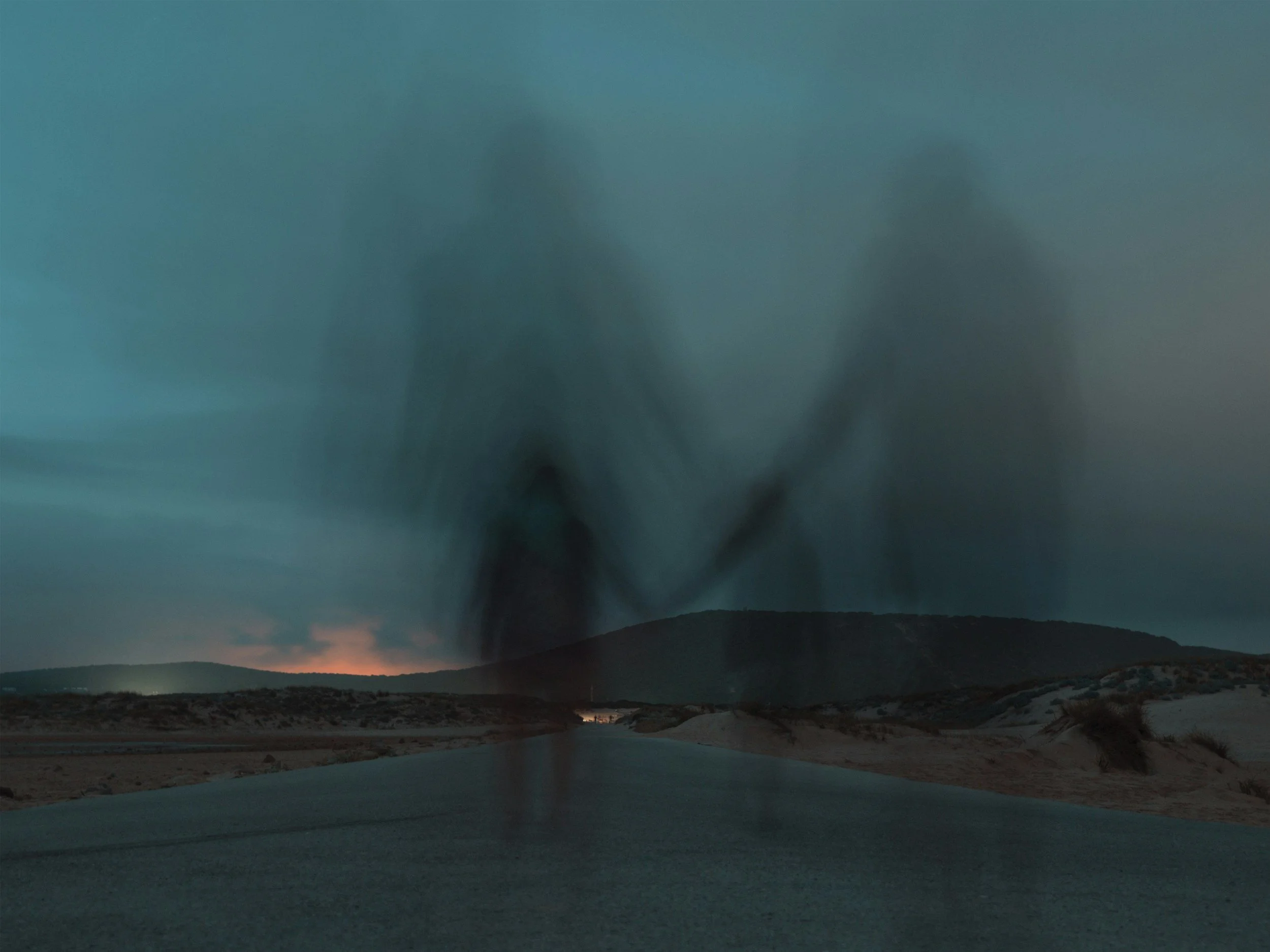
Now, when I close my eyes, and try to envision who I hope to be one day, who I aspire to be all that is left is a speck, floating in a river, wherever the current carries me, making no attempt to swim in any predetermined direction toward any internally or externally imposed destination.